Golf Trip Handicap Allowances: The Percentages That Keep It Fair
Team formats do not use 100 percent of your handicap. Partners cover each other, so full strokes over-reward the higher handicaps, and the World Handicap System publishes a recommended allowance for every format. Use these numbers and nobody argues on the first tee.
Start from course handicap, not index
Allowances apply to your course handicap: your index converted for the tees you are playing that day. Compute it first (the course handicap calculator does it in two seconds), then take the percentage.
The recommended allowances
| Format | Allowance |
|---|---|
| Individual stroke play | 95% |
| Individual match play | 100% |
| Four-ball (best ball) match play | 90% |
| Four-ball (best ball) stroke play | 85% |
| Alternate shot (foursomes) | 50% of the partners' combined |
| Greensomes | 60% low + 40% high |
| Scramble, 4 players | 25/20/15/10% by handicap order |
| Scramble, 2 players | 35% low + 15% high |
Match play strokes come off the difference
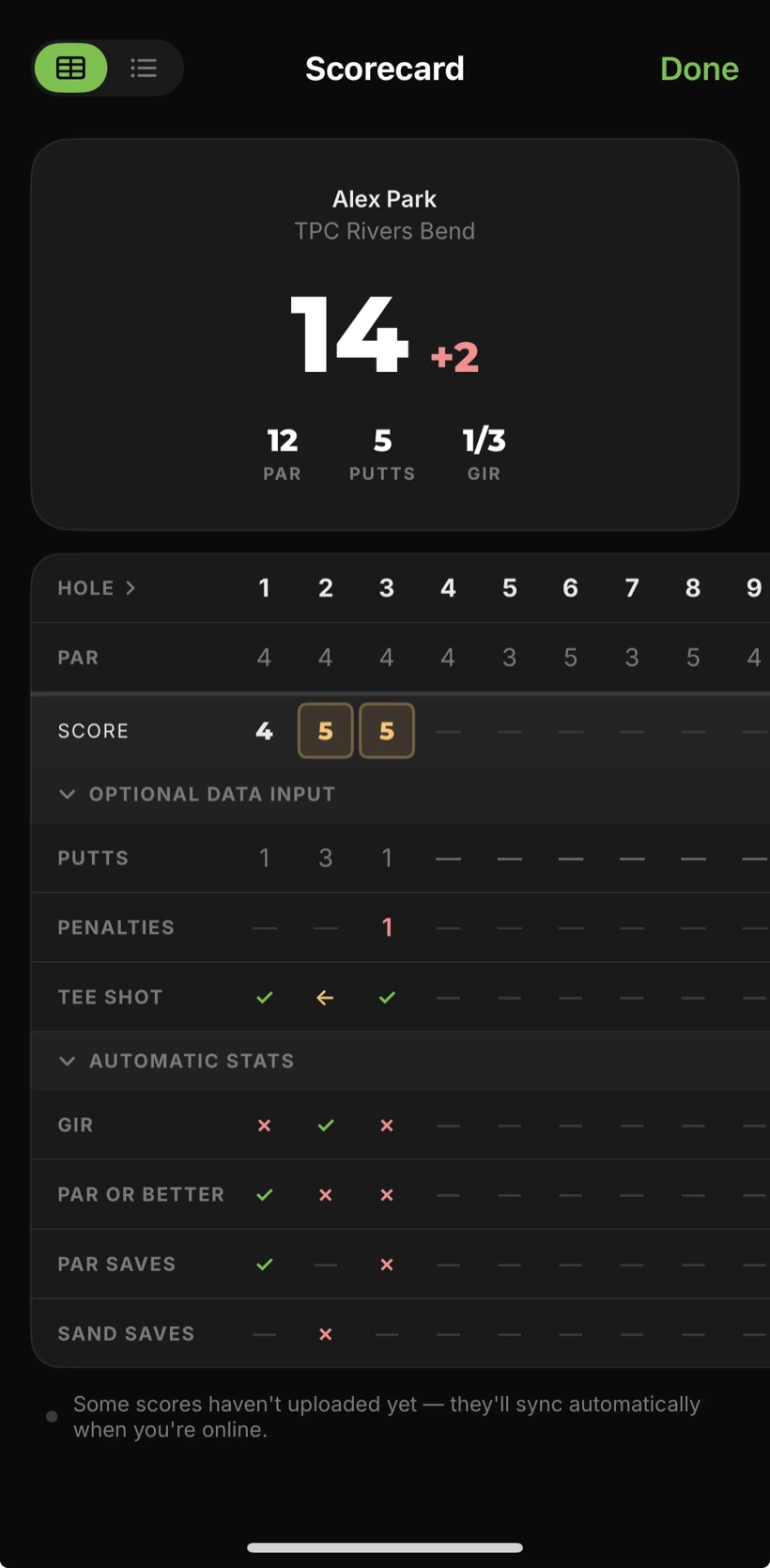
In a match, the best player in the group plays off zero and everyone else gets the difference. Two four-ball partners at 90 percent allowances of 9 and 14 against a low man at 8: they get 1 and 6 strokes, taken on the hardest holes by stroke index. That stroke index is the Handicap row on the scorecard, and it is exactly where your strokes land.
A worked example
Sunday singles, 100 percent allowance. Your course handicap is 15, your opponent's is 11. You get 4 strokes, on the holes with stroke index 1 through 4. Win one of those holes with a net par against a real par and the allowance did its job: the match came down to golf, not arithmetic.
Agree once, then automate it
Write the allowances into the trip rules before day one and never discuss them again. Or skip the spreadsheet entirely and let the scoring do it.
AGI Golf applies the right allowance for every format automatically, so your trip argues about golf instead of math.


Google Play and the Google Play logo are trademarks of Google LLC.